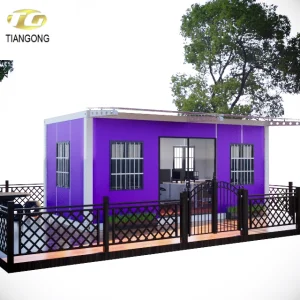
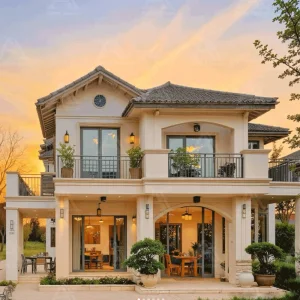
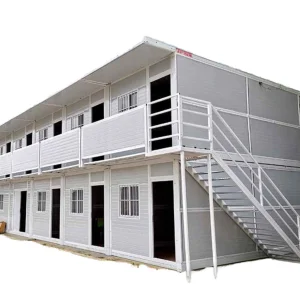
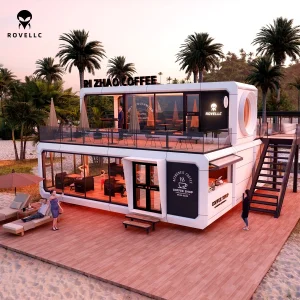
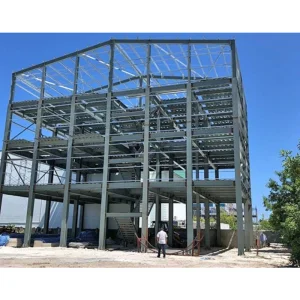
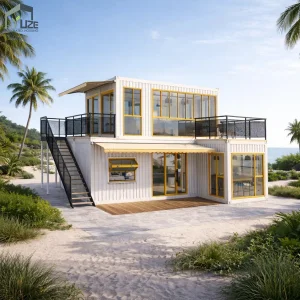
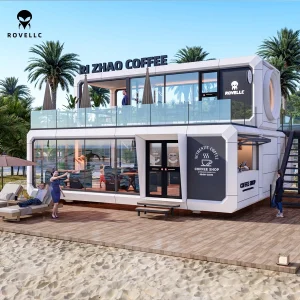
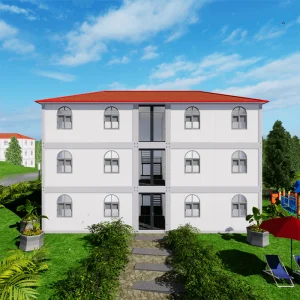
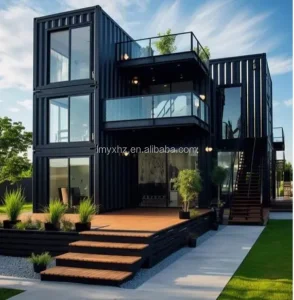
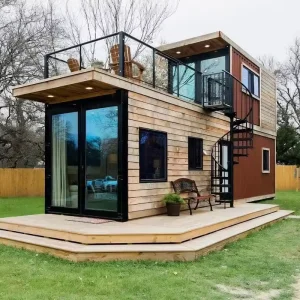
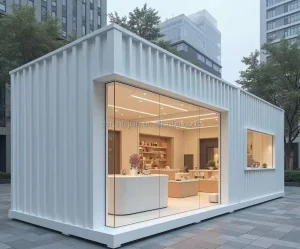
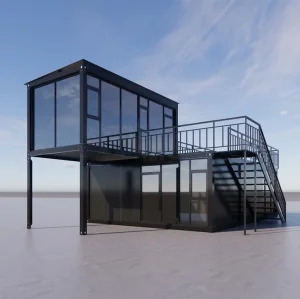
Four high-performance modular units engineered for regional compliance, rapid deployment, and high-altitude thermal insulation.
The Swiss construction sector is undergoing a paradigm shift. Historically defined by high labor costs, strict regional planning laws (such as local spatial planning laws - Raumplanungsgesetz (RPG)), and some of the world's most stringent energy efficiency standards (specifically the Minergie and SIA (Schweizerischer Ingenieur- und Architektenverein) codes), Switzerland's real estate market has reached a critical threshold. The demand for high-quality, rapid-execution, and carbon-optimized living spaces is driving developers, municipalities, and institutional investors to look beyond traditional structural methods toward advanced Modular Prefabricated Volumetric Construction.
Currently, the Swiss residential real estate market is characterized by structural housing deficits in economic hubs such as Zurich, Geneva, Basel, and Bern. Conventional construction projects are frequently delayed by weather in alpine regions, complicated local permitting phases, and the severe lack of domestic skilled labor. Offsite manufacturing mitigates these bottlenecks. By moving 85% of the construction process from the alpine building site to a controlled factory setting, the delivery timeline of multi-story modular apartment complexes is shortened by up to 50%, with cost predictability approaching 100%.
"The integration of modular building blocks compliant with Eurocode 3 (Steel structures) and the Swiss Federal Act on Energy (EnG 2018) is no longer a luxury; it is the cornerstone of risk reduction for institutional real estate asset managers operating in the DACH region."
Sustainable building practices are mandated by law across Swiss cantons. Under the current SIA 2040 directive (Swiss Path to the 2000-Watt Society), developers must calculate the embodied energy of building components, covering the entire lifecycle from extraction, processing, and assembly to final dismantling. Steel frame modular solutions, manufactured offsite by specialized global factories and deployed locally, offer a path toward zero-waste construction. Light-gauge steel structures and galvanized heavy steel frames are 100% recyclable, and modular units can be detached, relocated, or repurposed, satisfying the strictest requirements of the circular economy.
A central challenge for European developers implementing modular designs is the high local cost of manufacturing components. This is where the supply chain ecosystem of **Foshan SES House Co., Ltd.** becomes a critical asset. Located in Foshan, China—a global hub for advanced metal fabrication, electronics, and structural engineering—SES House integrates Industry 4.0 principles to deliver high-precision modular modules that meet Swiss quality, structural, and environmental standards.
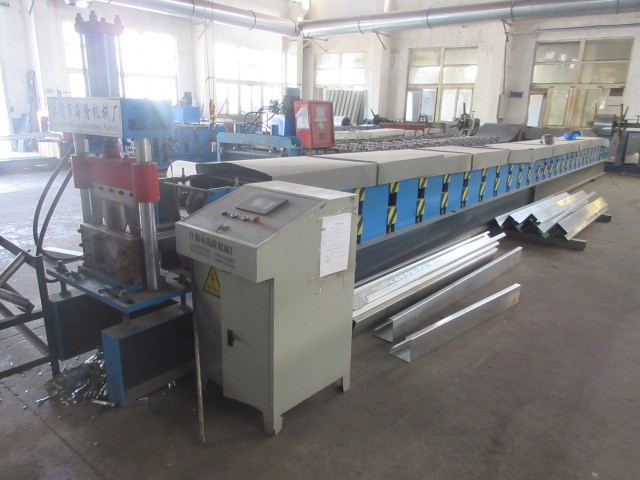
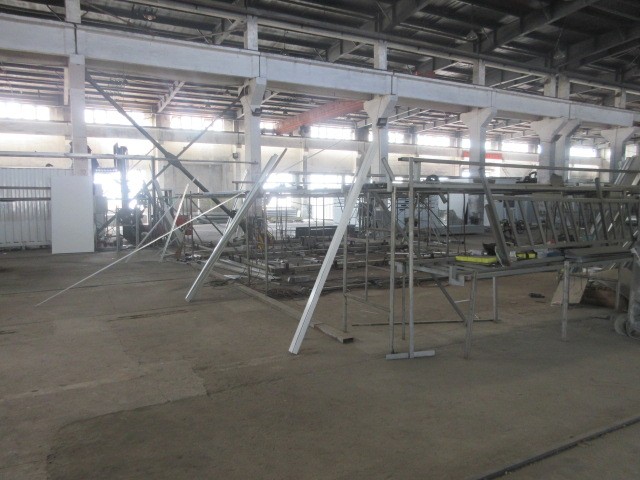
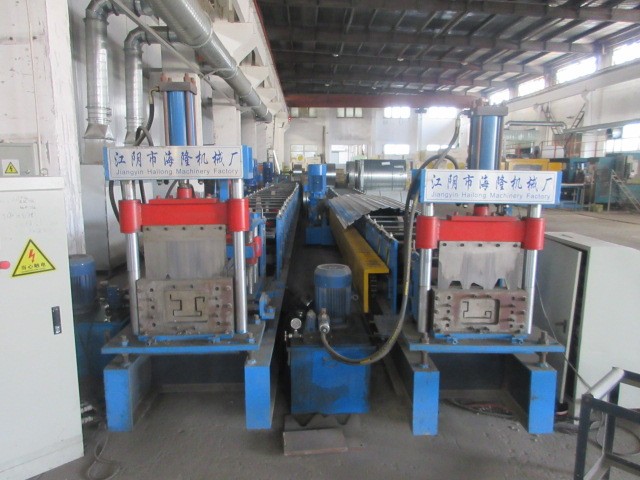
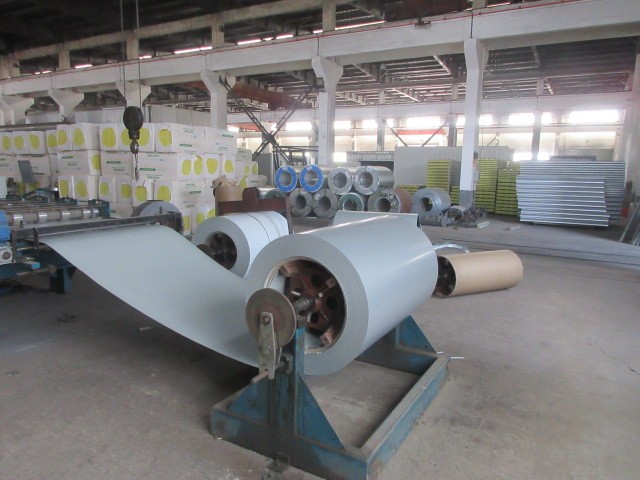
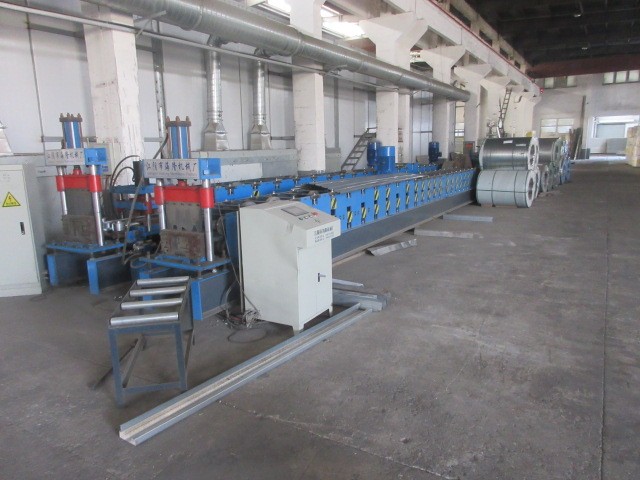
Our manufacturing facility leverages automated precision cutting, advanced robotic welding cells, and digital-twin quality control tracing to ensure structural tolerances are kept under 1.5mm. This degree of accuracy is crucial when modules are shipped globally and assembled on-site in Switzerland, where fit-up errors can cause costly delays. Through systematic design standardization combined with customizable finishing options (OEM/ODM workflows), we provide Swiss developers with prefabricated steel-frame assemblies that interface seamlessly with local HVAC systems, high-efficiency Swiss triple-glazing window units, and local electrical grids.
High-precision robotics, strict quality control procedures, and heavy-gauge galvanized steel frame production for European markets.
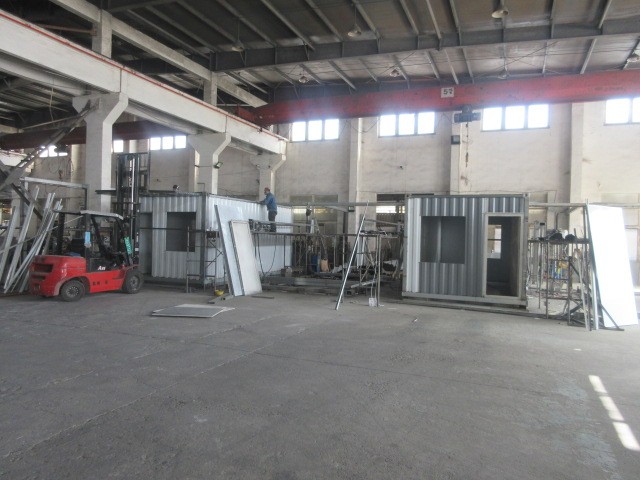
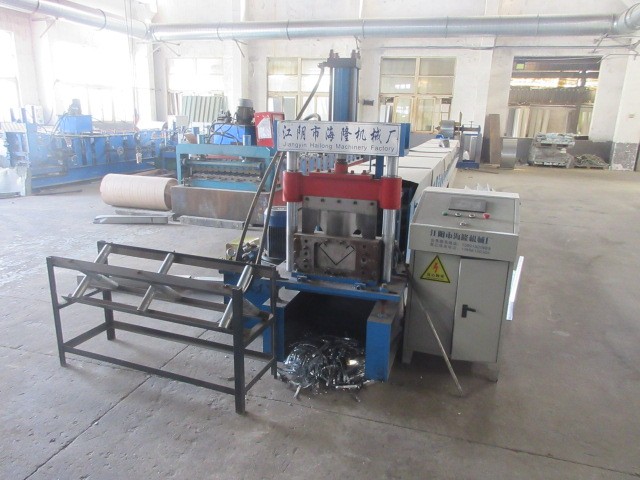
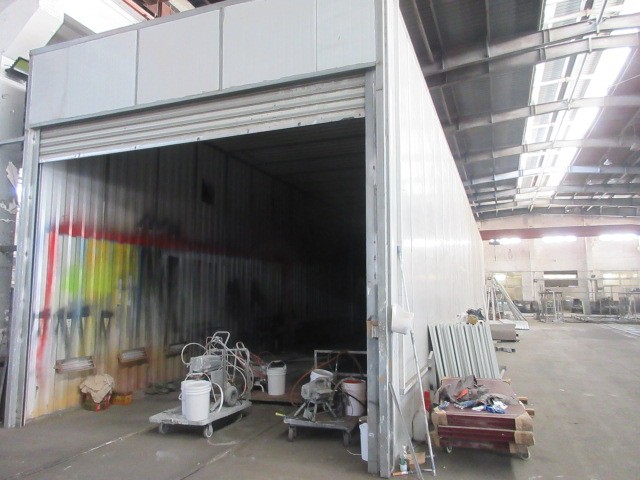
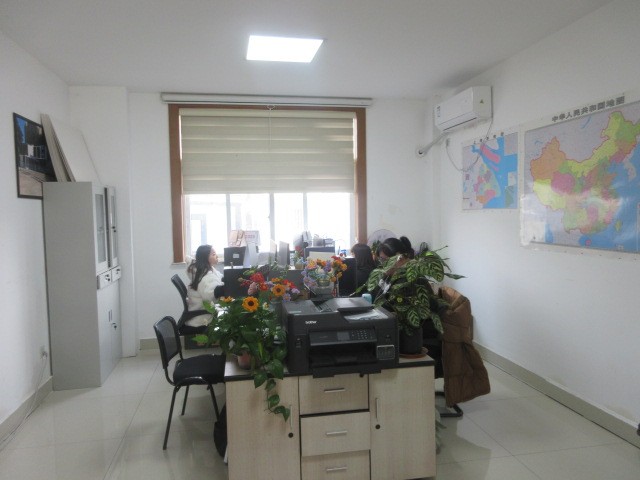
One of the primary logistics challenges for Swiss developers sourcing from global manufacturers is navigating the landlocked topography of Switzerland. Whether the delivery route utilizes ocean transport to Northern ports (Rotterdam/Antwerp) or Southern ports (Genoa) and transfers to inland rail grids, or uses direct China-Europe block trains (transiting through the New Silk Road directly to terminal stations in Basel or Zurich), cargo security and dimension standards are critical factors.
Foshan SES House designs modular components to fit within ISO container profiles (such as 20ft and 40ft High Cube containers) or bundles modules as certified flat-packs. This alignment ensures compatibility with global container logistics networks, minimizing container transport fees, simplifying custom clearances, and allowing flatbed trucks to navigate narrow alpine routes.
Building in Switzerland requires compliance with precise engineering and safety directives. The table below illustrates how Foshan SES House designs and manufactures components to align with local requirements, including the SIA 180 thermal envelope standards and SIA 261 structural wind and snow loads.
| Engineering Category | Standard Swiss Requirement | SES House Engineering Specifications | Validation / Certification |
|---|---|---|---|
| Structural Steel Frame | SIA 261 (Structural Actions), Eurocode 3 | Hot-dip galvanized steel Q355B (yield strength ≥ 355 MPa); anti-corrosion coating ≥ 80 microns. | ISO 9001 / CE Mark EN 1090-1 |
| Thermal Insulation | SIA 380/1 (Energy in Buildings), Minergie | Polyurethane (PU) / High-Density Rockwool core sandwich panels. Wall U-value: 0.12 - 0.18 W/m²K. | SGS Insulated Performance Verification |
| Acoustic Isolation | SIA 181 (Sound Protection in Buildings) | Multi-layer wall systems with acoustic decoupling tracks, dense gypsum board, and fiberglass cavity insulation. RW ≥ 52 dB. | Third-party laboratory testing report |
| Fire Safety Class | VKF Fire Protection Regulations (EI30 / EI60) | Class A non-combustible mineral wool cores, fire-rated structural gypsum, fire-resistant coatings. | EN 13501-1 Class A1 / A2 |
| Seismic Resistance | SIA 261, Seismic Zone Z1 to Z3b | Ductile moment-resisting space frames with high-tension bolt connections designed for dynamic shear forces. | Dynamic structural analysis modeling |
Implementing modular buildings in Switzerland involves a wide range of use cases, from urban centers to alpine terrain. Below are the primary application contexts where prefabricated steel frames provide advantages over traditional concrete and timber construction.
In the Swiss Alps, the construction window is limited by long winters, frozen ground, and difficult transport routes. Conventional construction can take years, resulting in lost revenue for hospitality operators. Using modular units, foundation work (such as screw piles or micro-piles) and off-site manufacturing proceed in parallel. Modular units, fully fitted out with interior electrical, sanitary, and mechanical lines, are delivered and assembled on site within days. Their high-density thermal panels and double-insulated subfloors are designed to handle temperatures below -25°C while maintaining indoor thermal comfort.
High municipal land values and low vacancy rates in Swiss academic and business hubs demand space-efficient, high-density residential solutions. Multi-story modular modular buildings, stackable up to 10 stories, allow developers to build on narrow urban parcels. These structures meet local code requirements for fire safety (EI60 ratings) and acoustic isolation between residential units, helping developers optimize project timelines and rental yields.
Clear answers to regulatory, logistics, and engineering questions for sourcing modular structures.
To meet the Minergie standard, modular units must achieve low U-values and high airtightness. We manufacture our wall envelopes using structural steel frames integrated with high-density polyurethane (PU) or rockwool insulation boards. Additionally, we leave tolerances for double or triple layer gypsum lining, which can be applied either at our factory or on-site. The standard configuration achieves a thermal transmittance (U-value) range of 0.12 - 0.18 W/m²K, which complies with local thermal envelope requirements.
For alpine locations, modules are constructed with reinforced steel frames using Q355B structural steel. This allows the structures to withstand snow loads of up to 4.5 kN/m² and Class 11 winds. The roofs are engineered with custom slope profiles and integrated heated drainage channels to prevent ice damming.
To meet SIA 181 requirements for multi-family dwellings, we employ structural decoupling. When modules are stacked, they form a double-wall system with a physical air gap between units. We use acoustic dampening rubber pads at load points, combined with mineral wool insulation and double-layered gypsum cladding. This configuration limits sound transmission to Rw ≥ 52 dB, preventing structural noise transfer between apartments.
We use two primary logistics paths: 1. **Ocean & Road/Rail Route**: Shipping from Shenzhen or Guangzhou port to European hubs like Rotterdam or Genoa, followed by inland rail or flatbed truck transport to Swiss destinations. 2. **Rail Freight Route**: Using the China-Europe Express directly from Chengdu or Chongqing terminal stations to European transport hubs, transferring to container chassis for Swiss customs clearance and final delivery. All structures are designed to standard container dimensions to simplify transport.
Yes, our engineering department designs all internal utility systems to match Swiss standards. We source and install CE-marked electrical conduits, junction boxes, and low-smoke halogen-free cabling that comply with local guidelines. Plumbing systems use EN-certified multi-layer composite pipes, which undergo pressure testing at the factory before shipping.
High-specification modular solutions for residential developments, student accommodation, and commercial projects across Switzerland.
Foshan SES House Co., Ltd. is an established modular house manufacturer, specialized in high-performance prefabricated homes, container houses, and structural steel buildings. Serving residential, commercial, industrial, educational, and healthcare sectors globally, we design and manufacture complex modular structures that meet the strict requirements of Swiss and European building codes.
From our advanced factory in Foshan, China, we operate modern production lines with integrated quality management. We offer comprehensive OEM, ODM, and project-based solutions tailored to the needs of developers, general contractors, municipal authorities, and private enterprises. Our services cover the entire project lifecycle, including:
Our global experience spans deliveries to North America, Europe, Australia, and the Middle East. With professional project management, customizable design capabilities, and dedicated support, we help developers reduce construction schedules and labor costs compared to traditional cast-in-place concrete methods.
Get in touch with our engineering team for detailed technical specifications, structural load calculations, and custom design pricing for Swiss construction projects.
Send Inquiry Now SES House