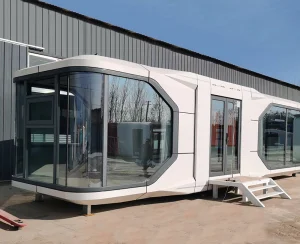
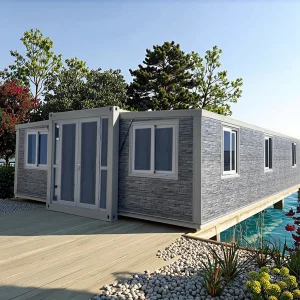
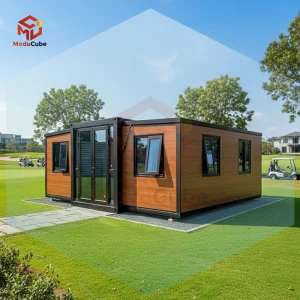
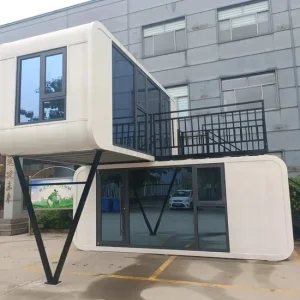
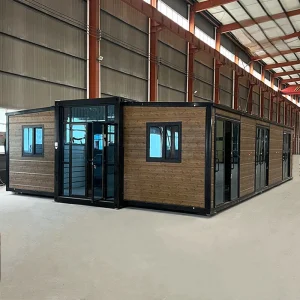
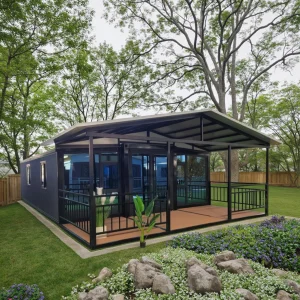
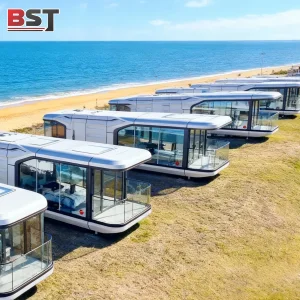
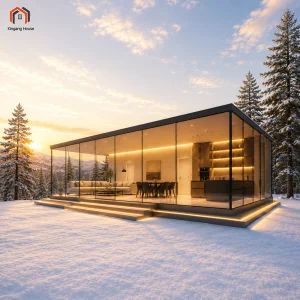
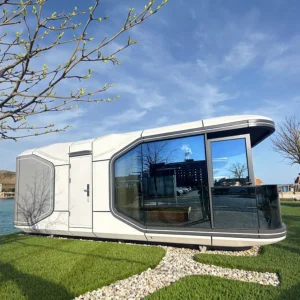
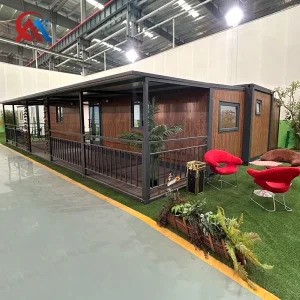
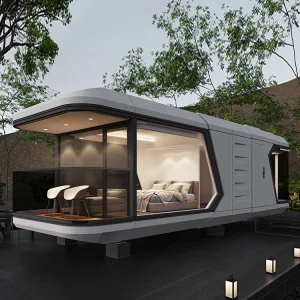
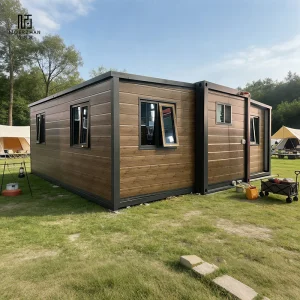
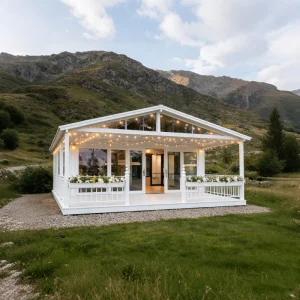
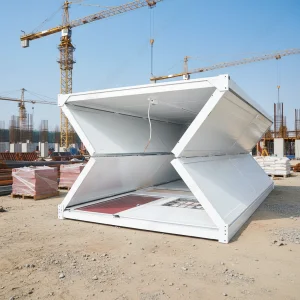
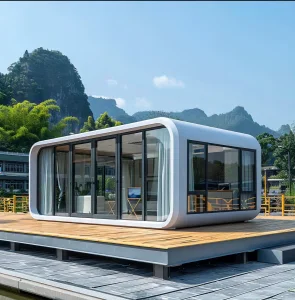
Select, high-performance prefabricated portable cabins engineered for immediate deployment across Costa Rican zones.
The global construction industry is undergoing a paradigm shift, transitioning from labor-intensive, time-consuming site builds to off-site manufacturing and high-precision structural modularity. In Central America, Costa Rica stands out as a unique market for modular solutions. Underpinned by its pioneering National Decarbonization Plan 2018–2050, the region prioritizes construction strategies that feature low environmental footprints, minimal local terrain disturbance, and superior thermal efficiency. The demand for portable houses in Costa Rica has grown exponentially, driven by eco-tourism ventures in remote reserves (such as Guanacaste, Arenal, and Manuel Antonio), infrastructural requirements for rapid agricultural offices, and housing programs requiring high seismic compliance.
This comprehensive industry analysis explores the technical viability, regulatory frameworks, supply chain channels, and engineering specifications that make imported prefabricated homes from top-tier Chinese manufacturers, such as Foshan SES House Co., Ltd., the optimal strategic choice for Costa Rican developers, municipal agencies, and commercial enterprises.
"Integrating portable structures into Costa Rica's distinct topography requires a blend of high seismic elasticity, advanced anti-corrosion chemistry for high-humidity coasts, and high-performance thermal insulation to limit carbon emissions from HVAC systems."
Costa Rica presents specific environmental and logistical parameters that shape how portable houses must be engineered and shipped:
Located on the boundary of the Cocos and Caribbean tectonic plates, Costa Rica experience frequent seismic events. Rigid, traditional masonry structures are susceptible to brittle failure during high-amplitude ground motions. Prefabricated steel-frame houses, conversely, benefit from high structural ductility. Galvanized Q235B or Q345B steel frameworks, engineered by Foshan SES House, function as flexible, integrated skeletons that absorb and dissipate seismic energy, strictly complying with the structural safety provisions of the Código Sísmico de Costa Rica (CSCR).
With regions experiencing up to 3,000–6,000mm of annual rainfall and constant exposure to saline sea winds along the Pacific and Caribbean coastlines, rust prevention is vital. Standard steel frames corrode within years if not appropriately treated. Premium portable house exporters utilize hot-dip galvanization with a minimum zinc coating weight of 275g/m², supplemented by epoxy primer and dual-layer polyurethane topcoats. This level of protection prevents rust creep and ensures a lifecycle exceeding 30–50 years in maritime environments.
Ductile light gauge steel frames designed to withstand intense lateral seismic loads in line with local building regulations.
Shortens the installation window by up to 70%, avoiding inflationary local material costs and high manual labor fees.
Eliminates heavy concrete pouring and soil erosion in fragile ecological zones like Guanacaste & Monteverde.
The global portable housing sector is valued at tens of billions of dollars, with China maintaining its position as the largest manufacturing and supply hub. By consolidating steel fabrication, interior fit-outs, electrical assembly, and plumbing line integrations within factory walls, Chinese exporters deliver highly precise prefab systems that are ready to live in. In comparison to local Costa Rican onsite construction, where skilled labor can be scarce and remote material transit drives up budgets, pre-engineered modular units offer predictable pricing, uniform steel properties, and predictable lead times.
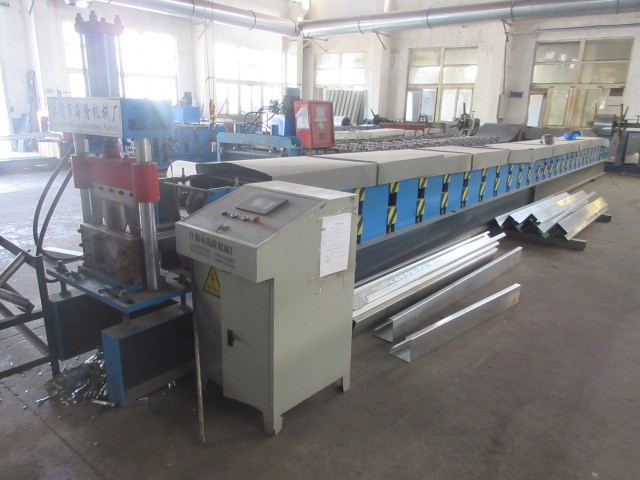
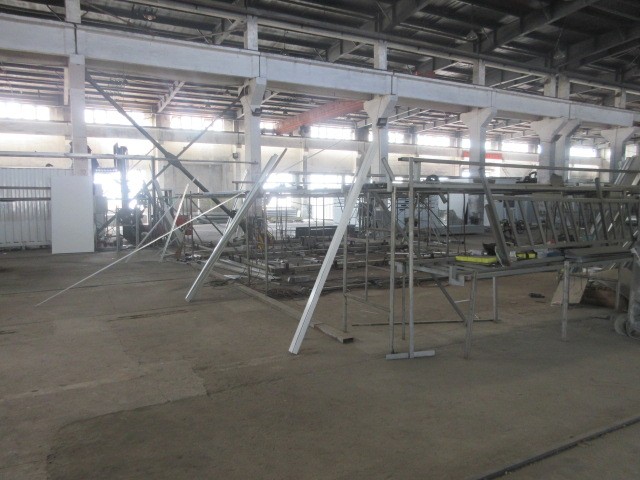
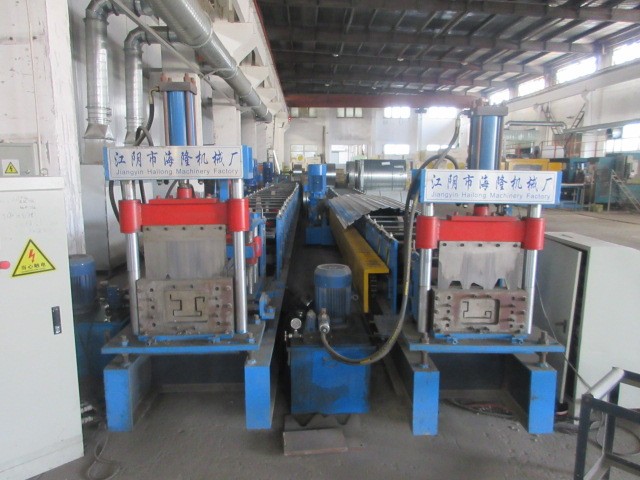
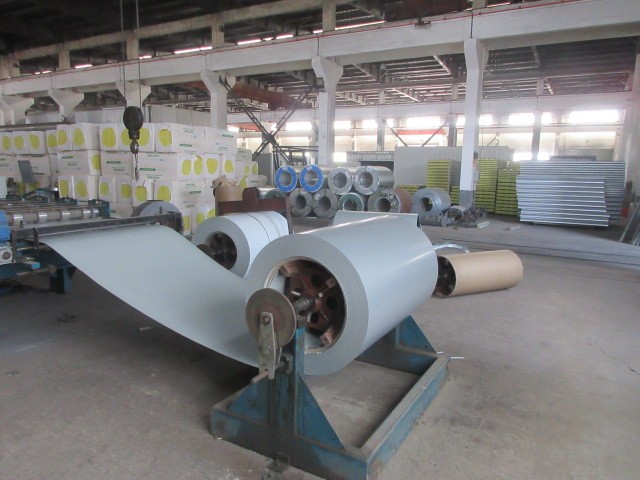
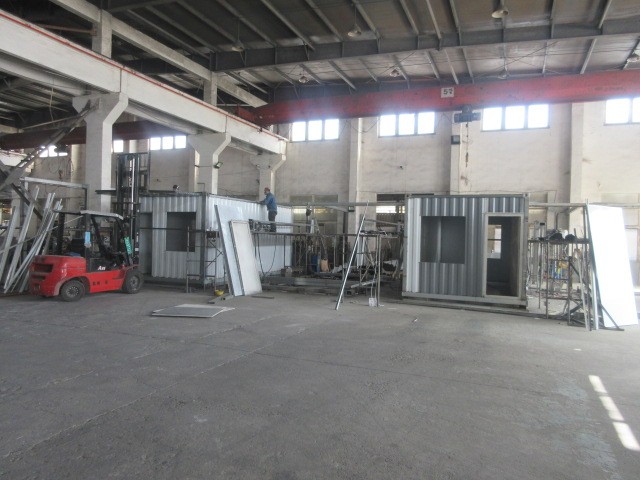
Furthermore, Chinese manufacturers use automated CNC plasma cutting, robotic welding lines, and continuous sandwich-panel laminators. This creates precision down to the millimeter, preventing panel gaps that could otherwise allow moisture intrusion in wet tropical climates.
Modular houses are deployed across several high-growth sectors within the Costa Rican economy:
| Performance Metric | Traditional Concrete & Timber | Foshan SES Modular Prefabricated Systems | Strategic Advantage for Developers |
|---|---|---|---|
| Seismic Performance | Brittle failure risks unless heavily reinforced; high foundation dependency. | Ductile, lightweight steel structural frame with high flexibility. | Excellent safety ratings under Costa Rican Seismic Code. |
| Installation Timeline | 6–12 months depending on weather, rain delay issues. | 5–10 days on-site assembly for complete structure. | Up to 75% faster ROI for commercial and hotel projects. |
| Environmental Impact | High waste, major soil excavation, heavy local disruption. | 90% factory built, zero-waste, screw-pile foundation capable. | Supports Costa Rica's carbon-neutrality initiatives. |
| Insulation & Thermal Control | Variable. Relies on post-applied fiberglass or polystyrene. | Built-in PU/Rockwool core panels (up to 100mm) + Low-E double glazing. | Drastically reduced operational air conditioning energy bills. |
| Corrosion Resistance | Timber rots, standard iron rusts rapidly. | Hot-dip galvanized structure with triple-barrier paint layers. | Low maintenance costs in highly humid beach environments. |
Exporting to Costa Rica requires meticulous adherence to local and international construction standards:
All load-bearing structures exported by Foshan SES House undergo finite element analysis to ensure performance against severe wind shear and earthquake dynamics. Structural columns and trusses are calculated using structural analysis software like SAP2000, ensuring they meet the required acceleration tolerances specified for Zone 3 and Zone 4 seismic regions in Costa Rica.
Managing heat gain in areas like Puntarenas requires advanced insulation materials. Standard models are configured with 75mm or 100mm Polyurethane (PU) sandwich panels, providing a low thermal conductivity rating. The integration of high-density rockwool core panels also ensures a fire resistance rating of Class A, which is crucial for meeting commercial fire codes.
Units are engineered to standard shipping dimensions (such as SOC container units or flat-pack configurations) to load onto standard ocean liners. Ships sail from Guangzhou or Shenzhen ports directly to Costa Rica's key logistics ports: Puerto Caldera on the Pacific coast or Puerto Limón on the Caribbean side. Clear documentation including bill of lading, certificates of origin, CE/ISO quality certifications, and detailed step-by-step structural drawings are provided to streamline the Costa Rican customs clearance process.
Foshan SES House Co., Ltd. is a leading modular house manufacturer, engineering robust structural systems for international markets.
Foshan SES House Co., Ltd. is a leading Modular House Manufacturer | Prefabricated Homes, Container Houses & Steel Structure Buildings dedicated to providing innovative, efficient, and sustainable building solutions for clients worldwide. With extensive experience in prefabricated construction, the company serves residential, commercial, industrial, educational, healthcare, and infrastructure sectors through high-quality modular building systems.
Located in Foshan, China, SES House operates advanced manufacturing facilities equipped with modern production technologies and strict quality management systems. The company specializes in the design, engineering, manufacturing, and installation of a wide range of modular structures, including prefabricated homes, container houses, steel structure buildings, modular villas, portable houses, worker camps, modular offices, educational facilities, healthcare buildings, and customized commercial projects.
SES House offers comprehensive OEM, ODM, and project-based solutions tailored to the specific requirements of developers, contractors, government agencies, and private enterprises. From architectural planning and structural design to manufacturing, transportation, and on-site assembly support, the company delivers complete turnkey modular construction services. Every project is engineered to achieve durability, safety, energy efficiency, and rapid deployment.
Quality and innovation are at the core of the company's operations. By utilizing premium steel structures, environmentally friendly materials, and precision manufacturing processes, SES House ensures reliable building performance while reducing construction time and labor costs compared to traditional construction methods.
The company has successfully supplied modular building solutions to customers across North America, Europe, Australia, Southeast Asia, Africa, and the Middle East. Supported by professional project management, competitive pricing, flexible customization capabilities, and responsive customer service, SES House continues to build long-term partnerships with clients around the globe.
Foshan SES House Co., Ltd. remains committed to advancing modern construction through smart modular technologies, sustainable development practices, and high-quality prefabricated building solutions that meet the evolving needs of global markets.
Key technical and commercial answers for developers importing modular houses to Costa Rica.
Yes. The light-gauge steel frame and structural container configurations are designed with ductile connections. Our engineering team calculates local seismic loads based on your site coordinate zone within Costa Rica, verifying calculations through advanced finite element software to meet municipal engineering compliance.
We apply a high-specification corrosion mitigation package: all steel elements undergo hot-dip galvanization (minimum 275g/m² coating weight), followed by marine-grade primers and dual-coat polyurethane protective paints. This ensures resistance to humidity, rust, and salt spray in coastal zones like Manuel Antonio and Limón.
Most portable structures require simple strip concrete footings, slab-on-grade, or ground screw-piles. Because the overall structure is lighter than heavy concrete buildings, foundation costs are lower. We provide concrete foundation layout plans within 14 days of order confirmation.
Manufacturing takes approximately 20 to 30 days depending on customization depth. Ocean freight from Foshan/Shenzhen to Puerto Caldera or Puerto Limón typically takes 25 to 35 days. Standard custom clearance takes another 3 to 7 days locally with proper documentation.
Connect with our expert engineering division for structural configurations, CAD blueprints, custom design options, and dynamic CIF pricing estimates.
Send Inquiry NowHigh-performance configurations suitable for residential villas, industrial offices, resort cabins, and modern commercial hubs.
 SES House