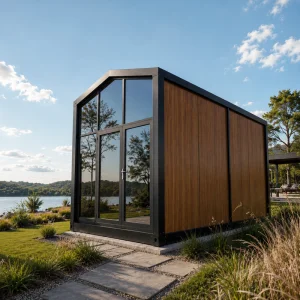
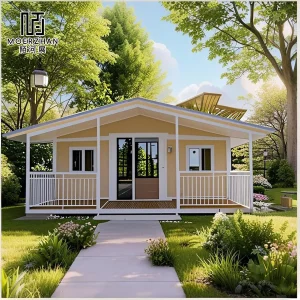
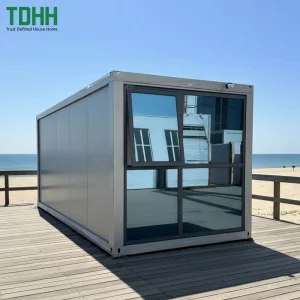
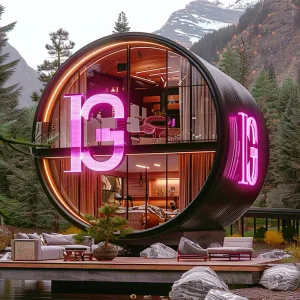
High-durability structural solutions engineered to meet Mumbai’s rigorous industrial standards and coastal environmental pressures.
Mumbai, the commercial capital of India, presents a unique set of challenges for traditional civil construction. High population density, limited physical space, soaring land acquisition costs, and traffic congestion make on-site building projects exceptionally complex. These constraints have fueled a massive transition toward modular construction and prefab cabins in both private and public sectors.
Key infrastructure initiatives, such as the Navi Mumbai International Airport (NMIA), the Mumbai Metro expansion, the Mumbai Coastal Road, and the Mumbai Trans Harbour Link (MTHL), demand rapid-deployment facilities. Sourcing rugged, reliable, and high-quality temporary site offices, labor camps, security cabins, and equipment shelters has become a mission-critical objective for lead contractors.
To successfully integrate modular building systems into Mumbai's ecosystem, project planners must navigate stringent municipal guidelines from the Municipal Corporation of Greater Mumbai (MCGM/BMC) while ensuring that cabins can survive the highly corrosive, saline marine atmosphere and intense monsoons. By leveraging international supply chains, particularly advanced modular steel manufacturing hubs in Foshan, China, Mumbai-based enterprises gain access to cost-efficient, structurally superior, and rapidly deployed alternatives to standard brick-and-mortar structures.
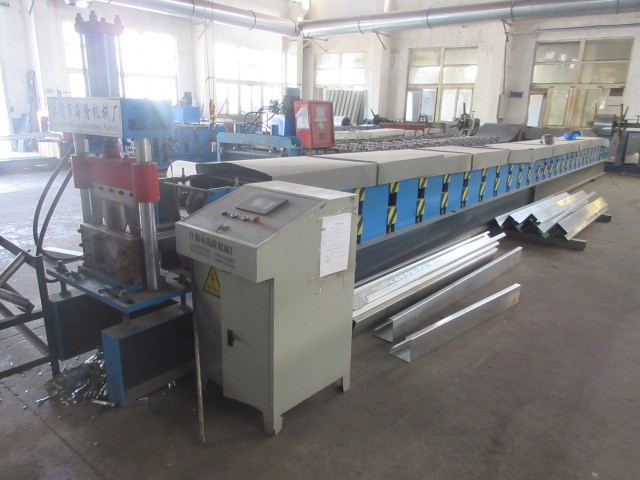
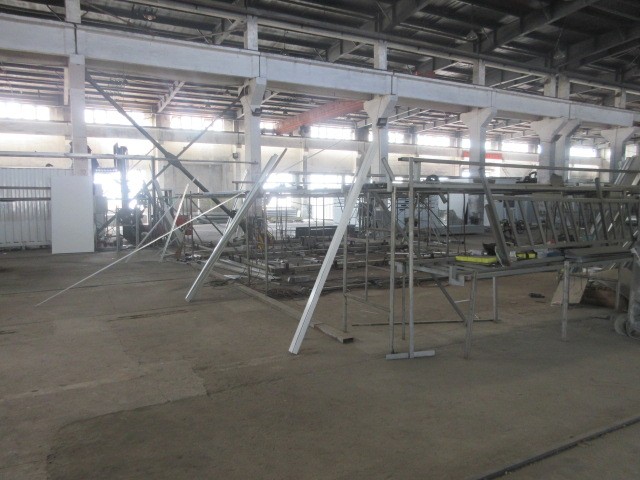
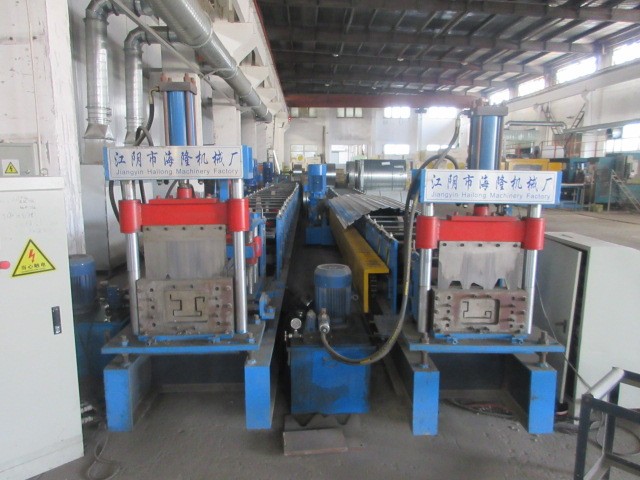
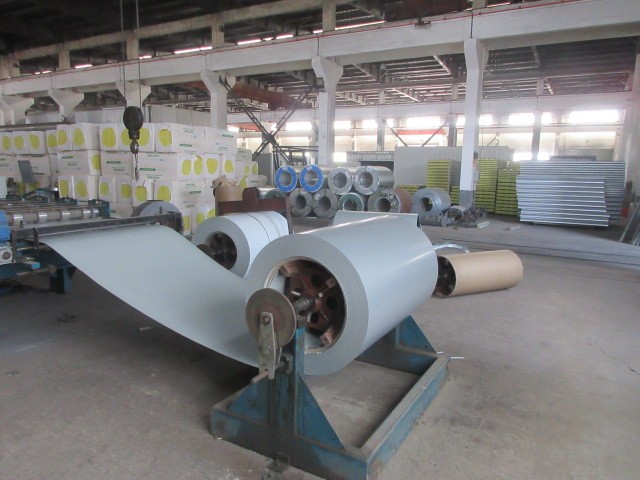
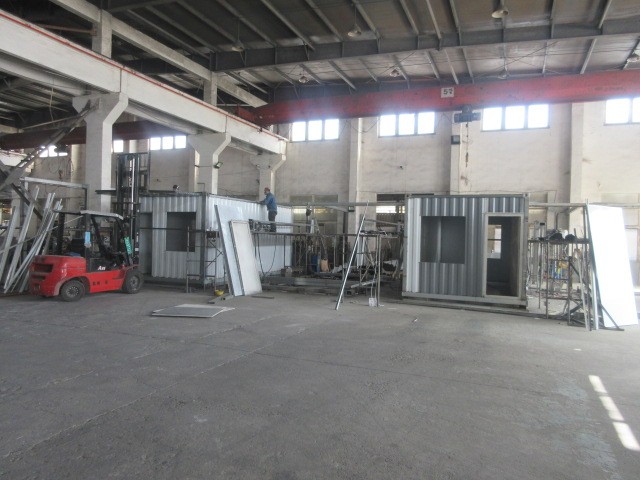
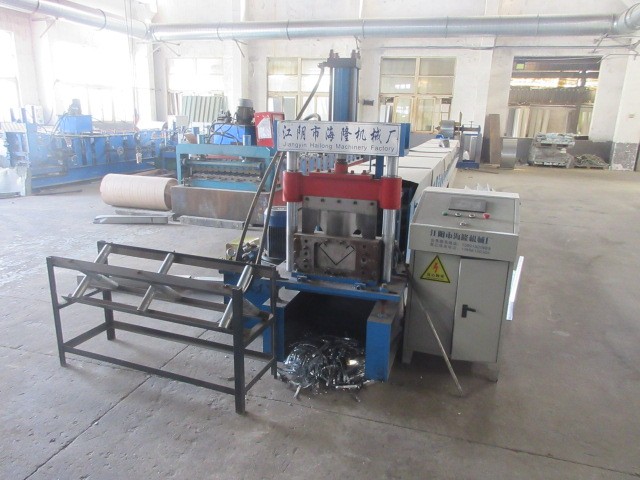
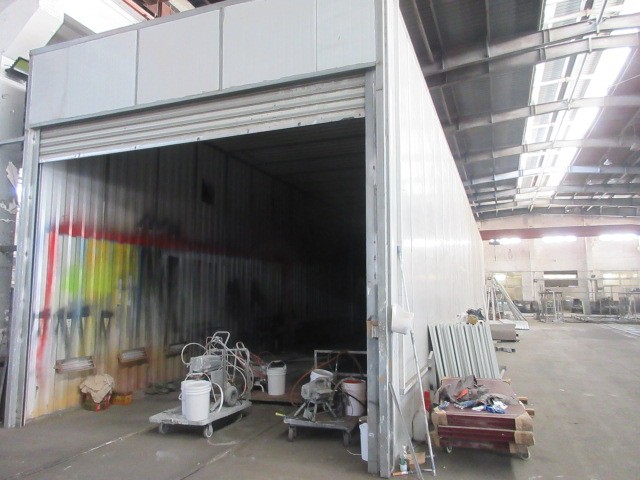
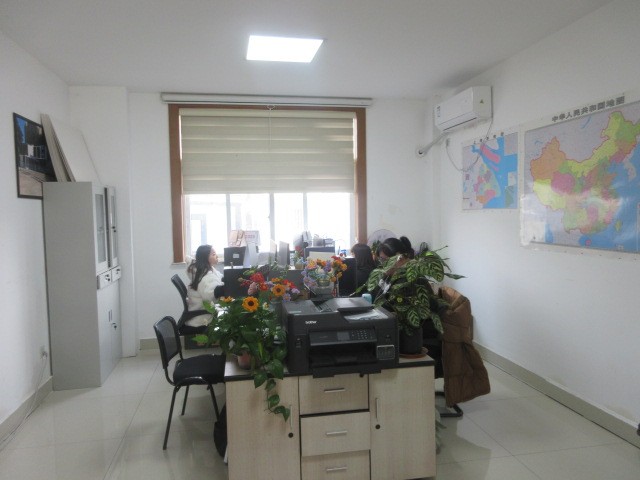
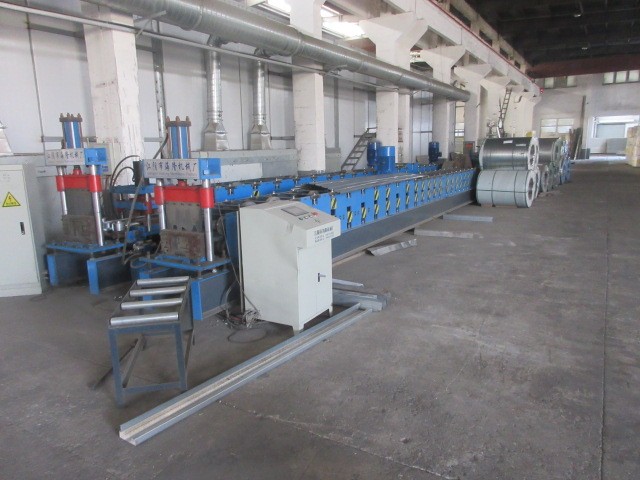
Underpinning our global distribution framework is a state-of-the-art modular fabrication facility with structural certifications.
Foshan SES House Co., Ltd. is a leading Modular House Manufacturer | Prefabricated Homes, Container Houses & Steel Structure Buildings dedicated to providing innovative, efficient, and sustainable building solutions for clients worldwide. With extensive experience in prefabricated construction, the company serves residential, commercial, industrial, educational, healthcare, and infrastructure sectors through high-quality modular building systems.
Located in Foshan, China, SES House operates advanced manufacturing facilities equipped with modern production technologies and strict quality management systems. The company specializes in the design, engineering, manufacturing, and installation of a wide range of modular structures, including prefabricated homes, container houses, steel structure buildings, modular villas, portable houses, worker camps, modular offices, educational facilities, healthcare buildings, and customized commercial projects.
SES House offers comprehensive OEM, ODM, and project-based solutions tailored to the specific requirements of developers, contractors, government agencies, and private enterprises. From architectural planning and structural design to manufacturing, transportation, and on-site assembly support, the company delivers complete turnkey modular construction services. Every project is engineered to achieve durability, safety, energy efficiency, and rapid deployment.
Quality and innovation are at the core of the company's operations. By utilizing premium steel structures, environmentally friendly materials, and precision manufacturing processes, SES House ensures reliable building performance while reducing construction time and labor costs compared to traditional construction methods.
The company has successfully supplied modular building solutions to customers across North America, Europe, Australia, Southeast Asia, Africa, and the Middle East. Supported by professional project management, competitive pricing, flexible customization capabilities, and responsive customer service, SES House continues to build long-term partnerships with clients around the globe.
Foshan SES House Co., Ltd. remains committed to advancing modern construction through smart modular technologies, sustainable development practices, and high-quality prefabricated building solutions that meet the evolving needs of global markets.
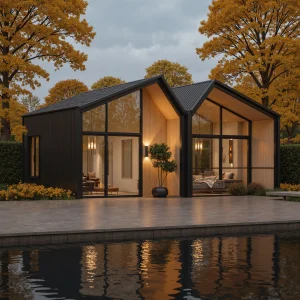
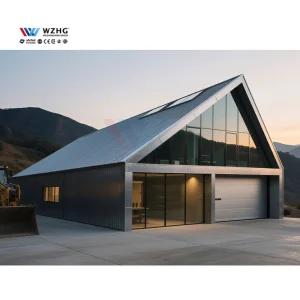
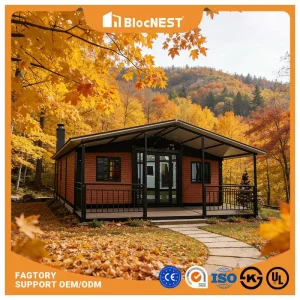
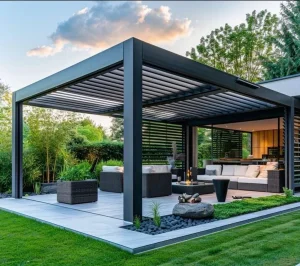
Elevated architectural designs tailored for Mumbai's neighboring leisure destinations, combining luxury aesthetics with rapid deployment capability.
Sourcing modular prefab cabins for Mumbai is not merely a matter of spatial planning; it requires thorough engineering for environmental resilience. Mumbai experiences a harsh maritime climate characterized by three distinct factors:
Due to its close proximity to the Arabian Sea, Mumbai's atmosphere is highly saturated with chloride ions, which accelerate the chemical oxidation of steel. When combined with industrial emissions, structural components face rapid degradation. Standard carbon steel frames quickly rust, compromising structural integrity within 2-3 years.
The Solution: We utilize heavy-gauge Q235B or Q345B steel frames that undergo a rigorous hot-dip galvanization process, achieving a zinc coating thickness of no less than 80 to 120 microns. Additionally, the frames are finished with multi-layer epoxy zinc-rich priming and marine-grade polyurethane top coatings (C3 to C4 corrosion classification under ISO 12944).
Mumbai's monsoons are notorious, dumping over 2500 mm of rain between June and September. Siting structures along the coastline means they must withstand high wind loads of up to 44 m/s (approx 158 km/h), as per the Wind Zone IV guidelines in IS 875 (Part 3) - the Indian Standard Code for Design Wind Loads.
The Solution: Every module is engineered with double-sloped or internal roof drainage channels capable of handling high-volume runoff. All wall junctions are sealed using weather-grade silicone sealants and EPDM rubber gaskets, backed by high-density, waterproof PU (polyurethane) or fire-resistant rockwool core sandwich panels.
To avoid legal challenges or demolition orders, prefab installations within the Mumbai Metropolitan Region (MMR) must comply with local planning codes. Developers must ensure that prefabricated cabins, office pods, and steel structures align with:
A detailed breakdown of the technical, logistical, and economic advantages of importing high-end modular cabins directly from Foshan, China.
| Evaluation Parameter | Local Mumbai General Fabrication | Foshan SES House Factory-Direct Import | Procurement Benefit for Developers |
|---|---|---|---|
| Steel Protection & Longevity | Manual welding, thin red-oxide primer painting. Prone to rust in 2-3 years. | Robotic welding, heavy hot-dip galvanization (80µm+) plus multi-coat marine paint. 20+ years lifespan. | Significantly reduces maintenance overhead and total cost of ownership. |
| Thermal & Acoustic Insulation | Standard thin EPS (Expanded Polystyrene) or simple single-skin sheet walls. | 50-100mm high-density Rockwool or PU sandwich panels (density up to 120 kg/m³). | Lowers HVAC power consumption by 35%, essential for Mumbai's humid climate. |
| Precision Engineering | On-site cutting with high dimensional tolerances (+/- 15mm), resulting in drafty joints. | Automated CNC machining with millimeter-level tolerances (+/- 1mm), ensuring airtight sealing. | Eliminates water leakage during torrential monsoon rains. |
| Logistical Configurations | Fully-assembled units shipped via flatbeds. High transport costs and site entry issues. | Flat-pack or folding modular systems optimized for shipping. 4 flat-packs fit into one 20ft container. | Reduces ocean freight and road transportation costs by up to 60%. |
| Compliance Certification | Vague material grading. Rare structural calculations or fire rating certs. | ISO 9001, CE, ASTM, and IS structural code alignment with comprehensive testing. | Facilitates fast approvals from local municipal corporations (MCGM). |
One of the primary logistical concerns for procurement managers is transit times and import customs clearance at Nhava Sheva (JNPT), Mumbai’s primary maritime trade hub. Foshan's close proximity to Nansha Port, Guangzhou, and the Shenzhen shipping terminals simplifies logistics. The shipping route from South China ports to JNPT typically takes between 12 to 15 days.
To ensure a smooth customs clearance process, our team exports complete shipping manifests, Certificates of Origin (Form E/Form B under the Asia-Pacific Trade Agreement, which may qualify for preferential duty rates), detailed packing lists, and certified structural blueprints. This logistical efficiency, combined with automated production lines, allows us to deliver high-volume, high-quality structures at prices that compete directly with local Indian fabricators.
From industrial zones to luxury resorts, prefab modular cabins are addressing distinct spatial and structural challenges across the region.
Projects like the Mumbai Trans Harbour Link, JNPT terminal expansions, and coastal roadworks operate in harsh marine environments. Traditional container units deteriorate rapidly in these locations. We supply reinforced, flat-pack office containers that serve as robust command centers and site accommodation blocks, keeping project engineers safe and dry during heavy rains.
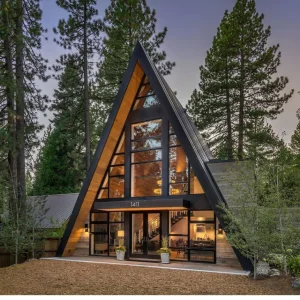
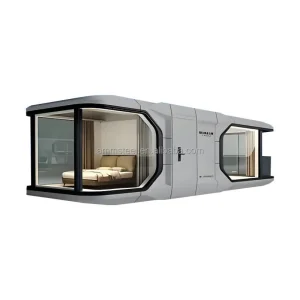
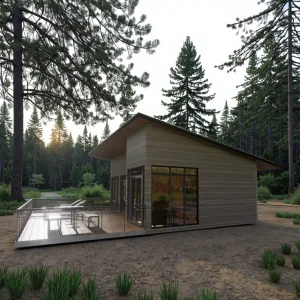
For tourist destinations like Karjat, Lonavala, Igatpuri, and Alibaug, luxury A-frame and modular resort cabins provide developers with high-yield, rapidly built tourist accommodations. Traditional construction on steep terrain or ecologically sensitive areas is slow and restricted. Lightweight steel frame villas and space capsules bypass these limitations, with assembly times of just 2 to 3 weeks.
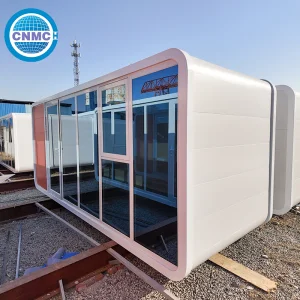
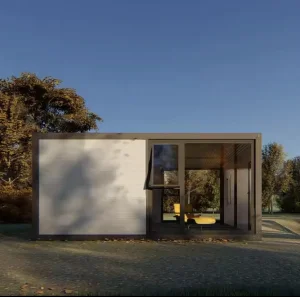
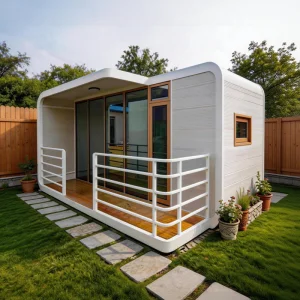
High rent costs in premium locations like Bandra, Juhu, and Colaba make mobile coffee shops, retail kiosks, and customized apple cabin structures highly lucrative. These mobile, plug-and-play units can be easily relocated and are designed to complement upscale, modern streetscapes.
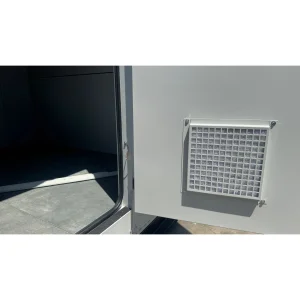
Mumbai’s high humidity levels require premium environmental protection for critical utilities. Our IP55-rated prefabricated cabins house MV/LV switchgears, telecommunications nodes, and backup UPS systems, shielding delicate equipment from humidity, dust, and flooding.
Discover our complete range of certified modular structures, fully adaptable to Mumbai’s regulatory frameworks and environmental conditions.
Purchasing prefabricated structures internationally requires structured planning across three distinct phases:
Every project begins with a comprehensive engineering review. Our design team coordinates with your architects to customize floor plans, structural loading parameters, electrical wire paths, and thermal insulating cores. Working designs are finalized in CAD/BIM software to guarantee error-free factory manufacturing.
Transporting modular units across oceans can incur high freight rates if not managed properly. To address this, we optimize structural shapes for maximum space utilization. Flat-pack container cabins ship in bundles of 4 units per 20ft GP container or up to 8 units per 40ft HQ. Expandable wing-cabins fold down to standard shipping sizes, eliminating out-of-gauge (OOG) shipping surcharges.
We supply all necessary compliance documentation, including standard HS Code declarations (typically under HS Code 9406 for prefabricated buildings), certified laboratory testing certificates, commercial invoices, and packing sheets. We coordinate with your customs broker in Mumbai to ensure swift, hassle-free customs clearance upon arrival at the port.
Upon arrival at your job site, our modular systems assemble quickly. Standard flat-pack cabins can be fully erected by 4 local workers in under 4 hours, requiring only a standard crane and basic hand tools. We provide complete 3D video tutorials, structural shop drawings, and step-by-step installation manuals. For large-scale projects, we can also dispatch structural engineering supervisors to provide hands-on assembly guidance.
Technical and logistical guidance to help procurement managers make informed decisions when importing modular structures into Maharashtra.
Importing directly from a specialized factory like Foshan SES House provides three key advantages: superior material quality, precision engineering, and cost efficiency. Our automated production facilities use CNC machinery to manufacture components with millimeter-level tolerances. Additionally, we utilize heavy-gauge hot-dip galvanized steel frames finished with C3/C4 marine-grade paint. This level of rust protection is rarely matched by local fabricators, who often rely on manual welding and standard primer coats, leading to corrosion issues within 2-3 years.
Yes. Our modular structures are engineered for coastal regions with extreme weather. The roof structures feature integrated internal gutter systems capable of managing intense monsoonal rainfall. The walls are constructed using high-density polyurethane (PU) or rockwool sandwich panels sealed with weather-grade silicone and EPDM rubber gaskets. Structurally, our cabins can withstand wind speeds up to 44 m/s (Wind Zone IV), which fully complies with the Indian Standard design code IS 875 (Part 3).
Unlike traditional heavy concrete buildings, modular cabins are lightweight and require minimal foundation preparation. A simple level concrete plinth or strip foundation is ideal. For temporary site installations or eco-resorts with sensitive terrain, you can use steel screw piles or precast concrete blocks. This significantly reduces site preparation time and cost. We provide detailed foundation load and dimensional drawings for every model to guide your local civil contractor.
Foshan’s proximity to major shipping terminals in Shenzhen and Guangzhou allows for efficient logistics. The shipping time from South China ports to Jawaharlal Nehru Port Trust (JNPT, Nhava Sheva) in Mumbai is typically 12 to 15 days. Factory production generally takes 15 to 25 days depending on the volume and customization requirements. This means your project can be delivered on-site in Mumbai within 35 to 45 days from order confirmation.
Yes. Our modular designs use materials that align with the National Building Code (NBC) of India, particularly regarding structural stability and fire safety. We offer Class A fire-rated rockwool panels to meet urban fire zoning requirements set by the Municipal Corporation of Greater Mumbai (MCGM/BMC). We supply all technical documentation and material test certificates to assist you in obtaining local structural and utility connection approvals.
All plumbing and electrical systems are pre-routed within the wall panels at our factory to ensure safety and neatness. We configure these systems to match Indian utility standards (230V, single phase, 50Hz) and install CE/IS-compliant switches, sockets, and conduits. For industrial applications, we offer customized IP55-rated switchgear cabins and distribution panels designed for high reliability in hot, humid environments.
 SES House